Monday, April 10, 2006

2006 Annual Conference Continues Online

Whether you attended ASCD's 2006 Annual Conference & Exhibit Show in Chicago or participated from your home or office, we have plenty of resources still available to help you follow up on the experience—or prepare for next year.
  • The 2006 Annual Conference blog is filled with information and is still being updated with session reports and pictures of all the conference action. Be sure to check it out and discuss the conference and issues that interest you.
  • If you enjoyed this conference experience, or were unable to attend, check out our Summer Conference or our Fall Conference for other opportunities to learn and network with colleagues.
Read the full post . . .


Wednesday, June 08, 2005

Annual Conference Audios

Conference Sessions on CD

Audio recordings of Annual Conference sessions are now available in the ASCD Online Store.

New this year, you can get CD bundles--recordings of sessions on the same topic bundled together. The topic bundles this year include

You can also get the top 10 set--recordings of the 10 most popular sessions at Annual Conference, such as
Read the full post . . .


2005 Summer Conference Blog Now Online

For those who are unable to attend our upcoming summer conference, which is sold out, we have just created the summer conference blog.

Currently, we are posting updates and important notices for attendees, but we will be blogging during the conference to give you a window into the sessions and other conference happenings.

Remember that this conference will be repeated next year in Denver, Colorado.

If you have any comments, questions, or suggestions for what we should cover in the blog, please leave us a comment on the summer conference blog.
Read the full post . . .


Tuesday, May 31, 2005

Invitation to Exhibitors for ASCD's 2006 Annual Conference

ASCD's Annual Conference and Exhibit Show puts exhibitors in touch with educational leaders who cover the breadth and depth of the education market.

With more than 12,000 key decision makers from across the education spectrum—and from around the world—in attendance, this conference is one of the largest meetings in education.

The 2006 conference theme is "Constructing the Future, Challenging the Past: Excellence in Learning, Teaching, and Leadership."

Learn about exhibiting at ASCD's 2006 Annual Conference.
Read the full post . . .


Thursday, May 05, 2005

Register Today for the Next ASCD Conference

Can't wait until 2006 for the next ASCD conference?

You don't have to. Although our 2005 summer conference is sold out, you can register today for our 2005 fall conference.

On October 23-25, our Conference on Teaching and Learning will take place in San Francisco, California. This year's theme is "Student Achievement: The Broader Picture."

You can extend your learning through our three Pre-Conference Institutes, and while you're at the conference, you can connect with your colleagues through our networking opportunities.
Read the full post . . .


Tuesday, May 03, 2005

Join Us in Chicago

From Mary Ellen Freeley, ASCD President

I hope you will join us at the 2006 ASCD Annual Conference and Exhibit Show, April 1-3, in Chicago, Illinois.

To allow attendees opportunities to think critically about where we have been and to become actively engaged with where we are going in education, the 2006 Conference Planning Committee selected the theme
Constructing the Future, Challenging the Past: Excellence in Learning, Teaching and Leadership
The conference theme will be organized around three strands:
  • Learning and Teaching
  • Leadership and Organizational Development
  • Policy and Advocacy
Thanks to all who shared the excitement of this year's conference in Orlando. Please mark your calendars now for April 1-3, 2006.

It has been twelve years since we gathered in the "windy city" to exchange ideas and expertise with our colleagues. We will do so again next spring while enjoying the stimulation of this exciting, revitalized venue. Make plans now to attend our 61st Annual Conference.

I look forward to seeing all of you in Chicago!
Read the full post . . .


Monday, May 02, 2005

2006 Call for Proposals Is Closed

Over 1,500 proposals were received by the deadline of May 1. Our thanks to all those who submitted proposals.

By August 2005, ASCD will send notification of acceptance or nonacceptance to the primary presenter.

Read the full post . . .


We're on Our Way to Chicago

From Annual Conference director, Kathleen Burke--

Yes, we all know that Chicago is known for Lake Michigan, the Sears Tower, the El, Michael Jordan, and Oprah, but on April 1-3, 2006, it will also be known for ASCD's 61st Annual Conference and Exhibit Show.

The theme of the 2006 conference is Constructing the Future, Challenging the Past: Excellence in Teaching, Learning, and Leadership. It will be held at the Lakeside Center at McCormick Place.

Please make plans now to join us and participate in the conference's exhibit show with over 400 exhibits including the ASCD Center, the three general sessions, 10 special feature sessions, and over 500 concurrent sessions.

A full description of the conference will be available online in August but save the dates on your calendar now.

Read the full post . . .


Friday, April 29, 2005

How Are We Doing?

This blog is the result of feedback from our members and Education Update readers, who told us that they found our Annual Conference coverage useful, but wished that it was more timely.

We strive to make make our Web pages informative, interesting, and user friendly, and we want to hear from you if we are succeeding.

You can provide feedback on our blog by using the comment link at the bottom of any post.

Questions or Concerns?

If you have a question or concern about Annual Conference, you may find the answer to your question in our frequently asked questions. If you don't find the answer to your question there, please contact our exhibits manager or director of annual conference.

Exhibits Questions

Teola Jones
Exhibits Manager
tjones@ascd.org

Conference Program Questions

Kathleen Burke
Director of Annual Conference
kburke@ascd.org

Conference Registration Questions

ASCD Service Center
1-800-933-2723, then press 2
member@ascd.org

Read the full post . . .


Tuesday, April 26, 2005

Angry and Aggressive Students

What To Do When Nothing Else Works--An Audio Highlight

In his fast-paced, energetic, research-based session, William DeMeo, developmental school psychologist for Cincinnati Public Schools, shared some proven intervention strategies for calming angry or aggressive students. The techniques are powerful and simple--the ones he describes here require only a paper bag or a finger.

In his conference session, DeMeo explained why the number one technique used to deal with aggressive children is "neurologically, completely useless." Hear him explain an alternative technique that only requires a paper bag in this brief audio highlight from his session.

"A lot of you are going to say to the child, when he begins to escalate, 'You need to breathe!'" Hear DeMeo explain why this doesn't work, and what you can do to get children to take a deep breath and calm down in this brief audio highlight from his session.

You may also be interested in


If you have difficulty with the audio file, a transcript is provided below.


Transcript (paper bag)
The number one technique you have been taught to deal with angry and aggressive children is, neurologically, completely useless. When the child becomes out of control, what do teachers or principals tell the child to do? [They say], "Calm down." Guess what? [The child doesn't] hear you--for one to three minutes. So, the technique you have learned is completely useless. How about that? But, since I've criticized your technique, let me show you something you can use. Now, I have what I call wonderful, wonderful, expensive, therapeutic materials. Sir, what is this? [audience response] And how much did the paper bag cost? Nothing. Does it fit into our school budgets? "Maybe," he says! Okay, now, think about this. I have a child who has begun to escalate out of control. All this emotion of anger building up, aggressiveness builds up--it needs to come out. Unless I do something to deal with it, it's going to come out on who? Myself or the other students. So here's what I do: The child begins to escalate, I take my paper bag, put it up, drop it, and I kick it. I take the paper bag at a safe distance, I drop it next to the student, and guess what he does? He kicks it! [crowd banter] When he kicks it, here's what happens--he releases energy. In addition to that, I now have his attention and focus. And I can now verbally calm him down. I've just bought one to three minutes in dealing with that out-of-control child. I have lots and lots of techniques to share with you, today.


Transcript (candle)
A lot of you are going to say to the child, when he begins to escalate, "You need to breathe!" But remember, what do we say? What doesn't happen? They don't hear you! So here's what we do: We develop some of what we call visual cues. Very, very simple. Everybody take your finger, put it out in front of you--not your middle finger, please. And take a deep breath and blow that finger out, like it's a candle. Go ahead and extend it and take a really deep breath--blow it out like it's a candle. And now blow out my finger--really, really deep breath. Okay, now here's what happens. You do this for two weeks. If you have never practiced this technique, and you take your finger, and you put it out in front of their face, what are they going to do? They're going to bite it--they're going to break it! But if you practice ... And, are children going to like doing this? Third grade or younger? Yeah, they like doing this stuff. They begin to neuralistically program their brain for this response. So, when you put your finger out, two weeks later, guess what they automatically do? Right. Blow it out. And as soon as they blow it out, they release energy, and you have their focused attention.

Read the full post . . .


Monday, April 25, 2005

Connecting Dreams to Education

Audio Highlight from Conference Session

"Acknowledge that students can express themselves, understand their world, recognize that they do care about the future, and loosen up," that's the advice Darrell "Coach D" Andrews gave educators who wanted to know how to connect with young people, especially students of color.

Coach D gave an inspirational talk in which he interspersed stories about himself growing up in a single-parent family with accounts of his own children and the students he has worked with in the HYPE program (Helping Youth Pursue Excellence). The HYPE program is a drop-out prevention program that teaches high school students how to be confident and responsible.

He proposed that teachers start a schoolwide dream initiative that asks students to talk about and make posters about their dreams. By remembering which student wants to be a doctor, which a fashion designer, and so on, teachers can connect lessons and dreams. "Don't lower the bar; take it up," he said.

He also addressed "the attention economy" and urged educators to notice what is capturing students' attention in the media. "To get their attention, think like a marketer," he said, "but remember that kids are not committed to programs; they are committed to people." By focusing on the importance of relationships, identity, and dreams, teachers can win their students' attention, he said.

Listen to a brief excerpt of Andrews' session.

  • Dennis Littky put the microphone in the hands of his 16-year-old student Josue Lopez, who gave a heart-provoking assessment of his life that includes an imprisoned father and the determination to avoid following in his father's footsteps.
  • One Florida school presented data from their program that shows increased parental involvement improved student test scores.
  • ASCD Outstanding Young Educator Award winner, Pete Hall, said that the award is a celebration of the contributions of all educators and called for educators to join him in what he respectfully called "the attack."


If you have difficulty with the audio file, a transcript is provided below.


Transcript
I did this one time, in a middle school class, and I tell you, the teacher could not believe it. She said, "How did you get them to start talking about their dreams like that?" I said, "Because they want to. We've got to create the environment to allow them to do this." We created dream posters and all kinds of stuff. We took the posters--I'm going to talk about this in a moment--and put their pictures on it, and then we found people who had succeeded in that career and connected their faces. They're all lined up, like a hall of fame, in a sense. And we put their posters up on the wall, and we would start calling them "Doctor this" and "Lawyer that," and then, "Look at your colleagues up there--That's you and your colleagues." Because they had their pictures and their faces next to famous people who had excelled in that career. I told the teacher, "Every day they come in, call them by their professional name, because I want them to see their dream." We did this with one young man that was in there, whose father had been in jail all of his life, and who had been a challenge in his school. And [his] teacher contacted me three or four weeks later. She said, "Darrell, we have a new person in my classroom. Because now, he was starting to see that he can accomplish his dream."


Read the full post . . .


Thursday, April 21, 2005

Providing Equal Opportunities for Latino Children

Audio Highlight from Conference Session

In this audio excerpt from her session, "The Challenges of Latino Demographics to Educational Accountability in a Democracy," hear Ana Martinez Aleman discuss how high-stakes testing disproportionately affects the burgeoning population of Latino students in America.

Listen to a brief excerpt of Aleman's comments.


If you have difficulty with the audio file, a transcript is provided below.


Transcript
For Latino children this is especially problematic. As the fastest growing sector of our American population, we should be especially concerned with our ability to truly provide equal opportunities for Latino children to develop their gifts, their idiosyncracies--to develop their positive contributions to American society. When we restrict their development through educational policy that presupposes that individuality, that believes them to be already be made, or that they have talents or abilities that are free of time, place, and the conditions of their environment, we're really resorting to what Dewey would say is an undemocratic vision. In that, we betray a more productive and improved American future. What the data on accountability tell us about the prospects of Latino children in the coming decades is that they will be limited largely to service sector and low-wage employment. We're educating the fastest growing sector of our school children to do little more than that. Latino children today will likely be adults whose intellectual resources are unlikely to have been tapped by public schooling, and whose contributions to art, politics, science, music, athletics, medicine, and the law will be underachieved. They will be individuals that John Dewey would charactarize as unused resources in democracy.


Read the full post . . .


Wednesday, April 20, 2005

Success Strategies for Teachers of African American Children

Audio Highlight from Conference Session

In this audio excerpt from his session, "Success Strategies for Teachers of African American Children," hear Baruti Kafele talk about the importance of getting to know African American children--knowing who they are, in terms of their personal histories and aspirations and within the contextual histories of being black in America.

Listen to an excerpt of Kafele's comments.

Join the discussion
You can read other educators' responses in the comments below and add your own thoughts, opinions, or comments.

  • Closing the achievement gap requires providing students a "counter-narrative," according to Theresa Perry, author of Young, Gifted, and Black. Learn more.
  • For more on the achievement gap, read ASCD executive director Gene Carter's column, "Closing the Gap."


If you have difficulty with the audio file, a transcript is provided below.


Transcript
Here we are [in] 2005, on April 4th. Guess what? Our children are operating on the same intellectual level as their ancestors back in slavery, relative to knowledge of their history. The same intellectual level. We're talking of a period of 400 years, and they are at the same place. Because nobody has restored it. Nobody has given it back.

There are no mandates that say these children have to know who they are. So, then we want to bring in--well, these kids can't read. Let's bring in the best reading program. These kids can't compute. Let's find the best math program. These kids can't write. Let's find the best writing program. Well, how are they going to receive it if they don't know who they are?

They don't know who they are--They're clueless. When you get back to school tomorrow--and I know there are some [who] know, but I'm talking about the masses--ask them the question ... "Who am I?" But, to be more relevant ... ask them, "What was the significance of April 4th, 1968?" Because Dr. King, he died for them. He was trying to level the playing field for them. But if they have no knowledge of it, then they're not going to be able to produce at the level you want them to produce.


Read the full post . . .


Tuesday, April 19, 2005

Teach from the Heart to Support Adolescents

In his conference session, Dennis Littky put the microphone in the hands of 16-year-old student Josue Lopez, who gave a heart-provoking assessment of his life that includes an imprisoned father and the determination to avoid following in his father's footsteps.

Littky admitted that such bold approaches are a leap of faith--for example, the student who wanted to study the rapper Tupac. From that project came the student's evolving interest in people who have an effect on society. Before graduation, the same pupil was researching activist Nelson Mandela and orchestrating a peace forum.

Unconventional gambles like these have paid off in other ways for the poor and minority students who attend The Met. Littky said his students not only get into college, 75 percent graduate--a far cry from the typical 10 percent college graduation rate he described for most African Americans and Hispanics.

Read the complete report on Littky's session.

Read the full post . . .


Supporting Families of Struggling Students

How can you enlist families in the effort to improve struggling students' performance? One Florida school presented data from their program that shows increased parental involvement and improved student test scores.

Participants in one conference session learned how a Florida elementary school linked parents into the effort to raise student achievement by hosting well-publicized monthly dinner gatherings that included the children. There was also a topic-focused activity or presentation (child care was provided) designed to support student learning and strengthen families.

The data the presenters gathered showed not only increased parental involvement and interest in their children's academic performance as the year went on but also improved test scores among the children of parents who regularly attended--especially children who were considered struggling learners.

What has your school done to help struggling learners? Join the discussion; post a comment.

At conference, Dennis Littky said. "We enroll families, not just kids." Read about Littky's session.


Read the full post . . .


Monday, April 18, 2005

Teaching Better with Technology

"Technology can be a catalyst for comprehensive school improvement," said Don Knezek, chief executive officer of the International Society for Technology in Education (ISTE), at a presentation on Sunday afternoon.

Knezek and Lynn Nolan, ISTE's director of professional development services, shared several Web sites that educators can use to improve the use of technology for learning.

Knezek observed that "Technology pulls together various content areas, student engagement, and community." Nolan noted that technology can help schools assess their school improvement needs and identify areas of focus for professional development.

The two shared several Web sites as resources for improving the use of technology for learning:
  • ISTE--provides educational technology information and resources
  • Digital Edge--has multimedia examples of technology integration
  • Profiler--includes a self-report assessment environment with NETS surveys

ASCD also offers resources to help educators use technology to improve student achievement:

Read the full post . . .


Tuesday, April 12, 2005

African American Achievement

Schools that have closed the achievement gap give students a "counter-narrative" to combat societal messages that undermine the achievement of African Americans, noted Theresa Perry of Wheelock College in Boston, Mass., in her presentation, Promoting High Achievement Among African American Students.

Some Department of Defense schools, some Catholic schools, and some small public schools have created conditions that ensure high achievement for all students, said Perry, author of the book Young, Gifted, and Black. According to Perry, these schools affirm the humanity and intelligence of black students, upholding the value of commitment, thoroughness, and hard work.

All students at these schools participate as full members, Perry explained, "and membership means being an achiever." Equally important, students practice the behaviors—such as persistence—that give them the capacity to achieve.

Rather than assuming that students should come to school as motivated learners, the educators in these schools create an environment where "participation will create a motivated kid," Perry said. These teachers also recognize that students can be both intellectually smart and skill deficient, so they organize instruction around striving for excellence, not remediation. As a result, they are able to "reframe how black kids see themselves."

  • Stedman Graham stated that success is not determined by the color of skin or financial background, but requires you to "step out of your comfort zone."

Read the full post . . .


Practical Strategies for Coteaching

Have you been asked to coteach next year?

Do you coteach now but aren't sure whether you're doing it well?

Judging by the crowd that filled the room for the Monday session Coteaching: Practical Strategies for Facilitating Student Learning, many educators have questions about coteaching. The session presenters gave clear, practical information for getting started or getting better at coteaching, distinguishing four approaches to it:
  • supportive
  • parallel
  • complementary
  • team teaching
They also discussed and answered FAQs about these approaches, and helped participants consider various issues related to each. Best of all, the three presenters actively modeled each approach throughout the session, blending content and delivery--really "walking the talk"--to heighten participants' understanding.

What are your thoughts about coteaching? Write a comment using the comment button at the bottom of this post.
  • Two of the presenters, Richard A. Villa and Jacqueline S. Thousand, included a chapter about collaborative teaching in Creating an Inclusive School.


Read the full post . . .


Monday, April 11, 2005

How Music Came to the World

Amid presentations exploring the "promise of the future," students from Cypress Elementary School in Osceola County, Fla., shared their creative study and interpretation of the past--specifically the ancient Aztec folk tale, "How the Music Came to the World."

Before Monday's Closing General Session, more than 100 students ranging from age 5 to 11 performed the folk tale using music, dance, and drama.

The curriculum behind their performance supports the findings of our closing general session speaker and relates to other conference sessions on culture and the arts in education.

Directors Debbie Fahmie and Magdali Carrillo headed up the collaborative project that joined three Cypress Elementary groups, the Falcon's Forte Chorus and Orff Ensemble, the Backstage Drama Club, and the Coqui Dancers.

The performance was the culmination of a learning experience that began in October, when students began studying the ancient Aztecs as part of Hispanic Heritage Month. First, students read a book about the Aztec folk tale, then they learned to play authentic Aztec folk instruments. They also had to study the style of music and dance appropriate to the ancient Aztec culture. The performance combined chanting, acting, dancing, and playing musical instruments that included a rain stick, a conch shell, a jaw bone, and an ancient Aztec stone marimba.

The flavor of the past these students communicated so well depends on fulfilling the promise of the future by using power to ensure funding for the arts and fostering the creative passion these students demonstrated so clearly. Director Debbie Fahmie closed the performance with a parting thought along those lines: "We truly believe that through the arts, we can teach to the whole child."


Read the full post . . .


Thursday, April 07, 2005

Leaving Latino Students Behind

Accountability should provide the means for educators to provide equal opportunity for students, said Ana Martinez Aleman of Boston College. Yet today’s accountability movement--with its policies of high expectations coupled with low funding--is ironically increasing the disparities that it was meant to alleviate.

High-stakes tests have disproportionately affected students who are from poor and minority families, Aleman asserted in her comments at the John Dewey Society Memorial Lecture. Schools in high-poverty areas are narrowing the curriculum as they focus on test prep, and the dropout rate for Latino students in Texas is rising.

If their potential is not tapped, Latino youth will become "unused resources in our democracy," destined to low-paying service-sector jobs, Aleman warned. The growing Latino population could become a large underclass if their power and creativity are restricted, rather than enhanced, by our education system. "The consequences for Latino students are very significant," she said.

  • How effective are bilingual education programs for improving the English reading skills and general content knowledge of English language learners (ELL)? Find out in ResearchBrief.

Read the full post . . .


Wednesday, April 06, 2005

Teacher Donates Her Personal Library

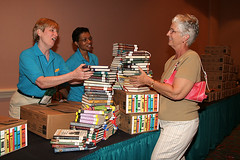
Books about Native Americans, Black history books, picture books, biographies and more--Joanne Parizek, a K-5 teacher from Jupiter, Florida, has been collecting books for young readers for more than 35 years. At ASCD's Books Bash, she donated 15 boxes worth--about 500 books--to the schoolchildren of Orange County, Florida.

Joanne Parizek hands over some of her books to ASCD staffers Diane Parker and Deborah Brown.

A reading teacher for most of her professional career, Joanne color-coded sets of books to use with children of different reading levels, ages, and interests. Her special fascination is with books that impart an understanding of different cultures. Because she will be taking on a new position as a K-5 math/science lab teacher in September, Joanne decided her books needed wider distribution. The Books Bash was her service project of choice.

The ASCD Books and Fun in the Sun Bash, sponsored by Pearson Education and Nova Southeastern University, was ASCD's second such service project, with all donated books headed for Title I schools in the conference city. The sponsors and conference attendees together donated more than 4,000 books this year.

Joanne was attending ASCD's Annual Conference with her daughter, an assistant principal, who helped transport all the books.


Read the full post . . .


Monday, April 04, 2005

Closing the Reading Gap

Providing books to children over the summer might be the best way to prevent summer reading loss. Reading researchers Richard Allington, Jennifer Graff, Lunetta Williams, and Courtney Zmach from the University of Florida-Gainesville tested that hypothesis in a three-year research study ending this summer. They shared preliminary results from their federally funded study at ASCD's Annual Conference.

They devised a book fair program that allowed 1,000 students entering 2nd grade to choose 10-12 free books to read during the summer. The children, all from economically disadvantaged families, agreed to complete a simple reading log about each book and return it by mail to the researchers. To discover more about what motivates students to read, researchers also interviewed a subset of students.

Researchers are finding that allowing choice and creating opportunities for social interaction about their reading increases students’' intrinsic motivation to read and stems the loss of reading skills that children who do not read books over the summer often experience.

The presenters also recommended another novel way to get books into the hands of students during the summer: open up school libraries at least one day each week.

Learn more about What Research Says About Reading.
ASCD members can log in for full access to this and other member publications.
Not an ASCD member? Find out more about the benefits of ASCD membership.

Read the full post . . .


A Schoolwide Writing Program That Leaves No Child Behind

In a lively, one-hour presentation to a packed audience, Dennis Pauli explained the Step Up to Writing Program. He modeled strategies as he led participants on a joyous journey through each step, comparing his pace to "taking a drink of water from a gushing fire hydrant."

Participants received a folder of materials filled with activities to practice back in their own school districts. Pauli tied the program to brain research, principles of differentiated instruction, and other best teaching practices. His energy and good humor left participants inspired to get back to the classroom and get kids writing.

Get more information on writing-read the recent Educational Leadership issue on writing.
ASCD members can log in for full access to this and other member publications.
Not an ASCD member? Find out more about the benefits of ASCD membership.

Read the full post . . .


Conference Sights and Sounds

The Sunday General Session was preceded by the music group Can Line Pan Line from Witter Elementary School in Hillsborough County, Fla. The students used trash cans and lids, steel buckets, and oil barrels as instruments to perform what the director called a combination of the movies Stomp and Drumline. The rhythmic performance was accompanied by modern dance routines that combined stomps and shimmies.

The final number was performed using oil barrels designed to sound like steel drums including a melody drum and a guitar pan that mimicked the sound of a guitar being strummed.

Does removing elementary school students from class for music education programs affect their academic achievement? Find out in ResearchBrief.
Join with like-minded educators in ASCD's Arts in Education network.
Read the full post . . .


Adapting Practice to Address Changes in Demographics and Culture

ASCD's African American Critical Issues Network sponsored a session titled "Using Creative Enriched Instruction to Advance African American Students’ Achievement." Rosie Kelley, John Cox, and Minnie Reynolds from Charles County Public Schools in Maryland shared highlights of their district's program to raise minority achievement and include more minority students in gifted and advanced programs.

Cox noted, "We have to acknowledge that these kids are behind and will not get straightened out" unless schools provide something different. He said that equity rather than equality is the goal--Charles County Schools provides funding and support based on need rather than evenly divided resources.

The district is focused on reducing achievement gaps between African American and white students, he said, and "you owe it to all children to get them to move" in terms of their learning.

You'll be able to read the full report on this session in the June issue of Education Update.
  • Closing the achievement gap requires providing students a "counter-narrative," according to Theresa Perry, author of Young, Gifted, and Black. Learn more.
  • For more on the achievement gap, read ASCD executive director Gene Carter's column, "Closing the Gap."
  • Stedman Graham stated that success is not determined by the color of skin or financial background, but requires you to "step out of your comfort zone."


Read the full post . . .


Jamaican Educators Discuss Island Education

A contingent of 50 Jamaican educators-including 20 principals-traveled to ASCD's Annual Conference in Orlando to find out about new practices and policies and gather materials to improve their own practice. Last year, about 30 attended the conference in New Orleans. Because they found it so beneficial, the Jamaican Ministry of Education sponsored increased participation this year.

Austin Ezenne from the University of the West Indies presented Sunday morning on "Responding to the Call for Accountability." Participants from San Maarten, Trinidad, Barbados, the Bahamas, Jamaica, and the United States compared their education systems in terms of leadership, discipline, teacher/student ratio, and funding.

  • Read about new practices from
Read the full post . . .


If Wordsworth Were Principal

Put a romantic poet in charge of a school today, and what would happen? Sam Intrator, author of Teaching with Fire: Poetry that Sustains the Courage to Teach, suggested to his audience that a poetic viewpoint might be just the restorative needed in an age when so many demoralized educators leave their profession within their first few years.

Just as Wordsworth would have celebrated the innocence of childhood and rejected being turned into a technician, educators must seek a sense of balance and remember why they entered the profession. "Ultimately the vocation of teaching is hopeful, triumphant, and eminently high-stakes," he said. Intrator urged educators to seek both self-renewal and institutional renewal. "Teaching is a rough-and-tumble way of living out your one wild and precious life," he said.

Read Intrator's article "The Engaged Classroom" in Educational Leadership.
ASCD members can log in for full access to Educational Leadership, and other member publications.
Not an ASCD member? Find out about the benefits of ASCD membership.
Read the full post . . .


How Educators Can Control Stress

Controlling stress may be the most important factor in preventing good teachers and administrators from leaving the field, Allen Queen told educators. He encouraged them to recognize three "time bandits" that create stress:
  • procrastination
  • the drive for perfection
  • the inability to say no
Queen suggested three approaches to combat it:
  • physical activity as part of a wellness plan, which can be as simple as taking a walk
  • resting activity, such as listening to music or taking a warm bath
  • mental activity, such as meditation or visual imagery
He then led his listeners through some simple relaxation techniques.

Learn how to help administrators and faculty cope with a crisis-read the Education Update article "Who Cares for the Caregivers?"
Read the full post . . .


Plan Ahead: 2006 ASCD Annual Conference in Chicago

I hope you will join us at the 2006 ASCD Annual Conference and Exhibit Show, April 1-3, in Chicago, Ill. It has been 12 years since we gathered in the "windy city" to exchange ideas and expertise with our colleagues.

We will do so again next spring while enjoying the stimulation of this exciting, revitalized venue. Make plans now to attend and submit a proposal for our 61st Annual Conference.

The 2006 Annual Conference Planning Committee selected the theme "Constructing the Future, Challenging the Past: Excellence in Learning, Teaching and Leadership" to allow attendees opportunities to think critically about where we have been and become actively engaged with where we are going in education.

The conference theme will be organized around three strands: Learning and Teaching, Leadership and Organizational Development, and Policy and Advocacy.

Please consider submitting a proposal to be a presenter at the 2006 conference. We strongly encourage you to submit your proposal online to ensure a timely receipt and confirmation of your proposal submission.

Thank you for sharing the excitement of this conference in Orlando! Please mark your calendars now for April 1-3, 2006. I look forward to seeing all of you in Chicago!

Mary Ellen Freeley ASCD President-Elect, 2004-05
Read the full post . . .


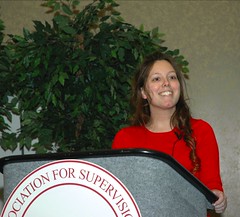
Student Leader Speaks


Nichole Brewer, the current ASCD student chapter president at Missouri Baptist University (St. Louis Campus), spoke at the Affiliate Recognition Luncheon Saturday afternoon.

Find out if your school has an ASCD student chapter.
Read the full post . . .


Question of the Day

What Conference topic or resource have you found most useful?

The issues of cultural competency and diversity training have been very helpful to me. In our school district, this is an issue of concern, and we are trying to broaden our knowledge base and use what we have learned to meet the needs of our students.
Conni Davis, Indianapolis

I liked the workshop on polishing our presenting skills. I learned a lot about the use of a person’s voice in presenting and how to enhance audience participation and have audience members engage with each other.
Nan Kemp, Salt Lake City

Dennis Littky’s presentation was the most moving, and the Second General Session with Jennifer James was most thought-provoking. I enjoyed meeting with author Charlotte Danielson. Spending 10 minutes talking to her puts a face to the concepts presented, and the subject matter means a lot more as a result.
Gordon Davis, Avon Park, Fla.
Read the full post . . .


Sunday, April 03, 2005

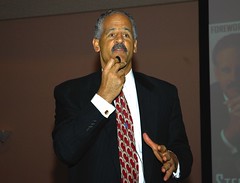
Graham: Plot the Master Plan

Stedman Graham understands what it is like to be defined by other people.

He wrote two New York Times bestsellers, played pro basketball in Europe and is a popular lecturer. But despite all that, he admitted to a packed house Sunday that he knew many of them had come to the session “to see Oprah’s boyfriend.”

Author Stedman Graham speaks to a packed house Sunday.
Graham didn’t dwell on his relationship with the talk-show superstar. However, he did cite her as an example of someone who took what she does well-talk-and turned it into a profitable career.

The question is, said Graham, "Do you know who you are?"

Graham stated that success is not determined by the color of skin or financial background. People find happiness by discovering what they do well and build on it.

"It is not about the external," he said. "It is about the internal."

Graham said everybody has the same constraints of a 24-hour day. Those who prosper do not do the same thing over and over.

Instead, they find a way to focus on their passion and realign their lives to make the most of each day and reach their goal.

Plotting that master plan is the premise of Graham’s bestseller, You Can Make It Happen: A Nine-Step Plan.

His steps revolve around an underlying energy that thrives on the kind of discipline he received in the military and while playing sports.

"If we change the way we view the world, there is nothing we cannot accomplish," Graham said.

Turning negatives into positives is key, as well as overcoming fears, learning to be flexible and creating a support team.

"Step out of your comfort zone," Graham said. "It is doing rather than saying."
Read the full post . . .


James to Educators: Tell Your Stories


Jennifer James urges educators to tell their own stories at the Second General Session Sunday afternoon at the ASCD Annual Conference and Exhibit Show.

Cultural anthropologist Jennifer James wants educators to tell a story, a story that embraces and reinforces their best values and passes them on to the next generation.

She explained what this involves during her presentation, "The Human Face of Technological Change," at the Second General Session Sunday.

Cognitive Dissonance "Splits the Mind"
"We are changing faster than any culture ever has in the history of the world," James said. "We have never seen change of this depth, this breadth and this intensity."

The result of this dizzying change is cognitive dissonance.

"Cognitive dissonance splits the mind and causes rage because you can't reconcile it with reality," James said.

Imagine a 15-year-old boy surging with testosterone who feels no connection to his culture and therefore experiences cognitive dissonance. That feeling can cause incidents like Columbine and other forms of violence, according to James.

"Everything You Need ... in a Weird Cartoon"
To help children cope, James recommends that educators tell compelling stories about the future. These "stories" are told in the way the storytellers live their lives and in the decisions they make.

Nelson Mandela, for example, tells a moving story of reconciliation that made a positive difference in South Africa, while Slobodan Milosevic tells a 13th century story of revenge that created a blood bath in Yugoslavia and huge loss of life, James said.

In terms of popular culture, children turn to their own storytellers-popular cartoons. The Mutant Ninja Turtles teaches the value of being fast, assertive, adaptable and confident, and it teaches higher forms of consciousness, higher forms of communication, meditation, mediation, teamwork, stress reduction and ethics.

"It's everything you need for this new world in a weird cartoon," James said. "This is a lot better than the Three Bears."

In the daily lives of educators, they too can tell a story in the face of incredible change.

"You are guiding. You are leading. You are taking a generation across a bridge from the past to the future," James said. "When you get over that bridge, we will have moved to a higher level of civilization. You make an extraordinary difference."


Read the full post . . .


President-Elect Candidates Forum

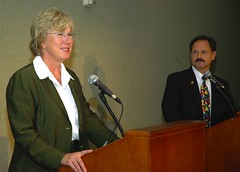
Conference attendees heard from ASCD President-Elect candidates in a forum on Sunday.

ASCD President-Elect candidates Nancy DeFord of Park City, Utah, left, and Kenneth DiPietro of Coventry, R.I., right, field questions Sunday during the meet the Candidates Forum.
Immediate Past President Ray McNulty facilitated this inaugural event. The President-Elect candidates (who will run for election in the fall of 2005) shared their visions for leadership of the Association.
Read the full post . . .


Rivera Urges: Don't Treat All Latino Students the Same Way

Insight into the lives of Latino students is critical if educators want to help them excel.

In her session titled "How to Increase Academic and Social Gains in Latino Students," Anica Diaz Rivera explained that while Hispanic students may have the Spanish language in common, they are not all the same.

Cultural differences factor into relationships between parents and the school, Rivera said.

For instance, many Latinos do not question authority figures, such as teachers. As a result, they have to be encouraged to participate in parent-teacher organizations.

"It's not that they don't care," said Rivera, who works with Latino students at Campbell Middle School in Smyrna, Ga. "They have no idea what we expect."

The daughter of immigrant Puerto Rican parents, Rivera said teachers can begin to earn trust during orientation. Translating material that is sent home and offering translators during meetings as well as food and child care goes a long way toward fostering support.

Understanding the dynamics of an immigrant family is also essential to helping a child get ahead. Because many parents are in "survival mode," they depend on their children to translate for them at doctor's offices or help with job applications and rental agreements. This dilemma not only pulls children from the classroom, but makes parents reluctant to discipline children over bad grades.

"The child ends up getting control and, out of guilt, parents allow it to happen," Rivera said.

So Rivera tries to show parents how their behavior affects the child's learning. She will go as far as convincing parents to give up a few days of work-often without pay-so they can shadow their child in school.

Parents learn firsthand that their child is unprepared and not doing their homework.

"What 6th- or 7th-grader wants to have Mom following you?" Rivera said.
  • In her conference session, Ana Martinez Aleman warned that the dropout rate for Latino students in Texas is rising and Latino youth risk becoming "unused resources in our democracy." Read more in our newest blog entry, Leaving Latino Students Behind.
  • How effective are bilingual education programs for improving the English reading skills and general content knowledge of English language learners (ELL)? Find out in ResearchBrief.

Read the full post . . .


ASCD Affiliate Receives Award for Overall Excellence


NCASCD President Terry Grier, superintendent of the Guilford County School District, Greensboro, N.C., accepted the ASCD Affiliate Overall Excellence Award.

Learn more about the benefits of membership in your local ASCD affiliate.
Read the full post . . .


Texas Educator Advises on How to Meet Needs of Hispanic Students

The Hispanic population is now the largest minority in the United States, and this influx of Hispanic people is causing many educators to wonder what they need to do to accommodate these students.

Ana Guzman, president of Palo Alto College, San Antonio, Texas, describes the needs of Hispanic students during Sunday's session.
Ana Guzman, president of Palo Alto College, San Antonio, Texas, addressed the specific needs of Hispanic children during Sunday's session "Understanding Hispanics to Create Educational Environments of Excellence."

"More and more Hispanics are settling in different areas of the country because that's where the jobs are," Guzman said. "School officials are asking, "What are we going to do with these children?"

Guzman offered specific ideas in three different areas-bilingual education, discipline and high expectations. In terms of bilingual education, Guzman said it is crucial for Hispanic children not to begin reading English until they are proficient at reading Spanish.

"If you do both at the same time, it is absolutely confusing," she noted.

Based on her own bilingual teaching experience, Guzman observed that Hispanic children are ready to enter mainstream education by the third grade.

"[My students'] averages in English reading by the time they entered the mainstream were higher than the average for children in that same school," Guzman said.

As for discipline, Guzman said Hispanic children come from homes where order and structure are valued. The chaotic environment of many urban schools is a disconcerting experience for Hispanic children.

"We need to develop systems that show we care enough about students to create a place that is safe for them," Guzman said. Educators also need to care enough to set high expectations for students, including Hispanics.

Guzman said that Hispanics are often nudged toward the easier general education classes and not the more advanced courses.

Educators often make the mistaken assumption that Hispanics cannot handle advanced courses, she noted. "Hispanic children do not need an easy curriculum," Guzman said. "An easy curriculum gets Hispanic children nowhere."

Listen to a pre-conference interview with Guzman.
Read the full post . . .


Monday Schedule to Meet ASCD Authors

Come by the ASCD Center in booth 1451 in the Exhibit Hall, where you can meet your favorite ASCD authors, view videos, and find out more about the benefits of being an ASCD member at the membership desk.

Meet Your Favorite Authors
Come and introduce yourself to some of ASCD's most respected authors and have them sign a copy of a book. The authors who will be in the ASCD Center Monday, April 4 are

View Videos, Explore Books
In the ASCD Center, you can also view ASCD videos and explore our latest resources for educators, including
Join Us
Find out about the benefits of joining ASCD at the membership desk in the ASCD Center. If you're already a member and want to renew or upgrade your membership or have a question about it, you can get your answers here.
Read the full post . . .


ASCD Board of Directors Meets


ASCD President Martha Bruckner (center) presides over Friday's ASCD Board of Directors meeting at the Rosen Centre Hotel. On the left is ASCD President-Elect Mary Ellen Freeley and on the right is ASCD Executive Director Gene Carter.
Read the full post . . .


Question of the Day

How Do You Teach About Other Cultures in Your Country?

"We teach a lot about other cultures in social studies. We teach them (students) with textbooks. We use a lot of Internet, movies and newspapers. We try for teachers to become part of the discussion, but not lead it, so it will become more interactive."
Bernardita Stuven, Chile


"We don't have a national curriculum, but we have a national statement of expectations. It includes social justice, which has tenets of multiculturalism, tolerance, diversity and inclusivity."
Ken Avenell, Australia


"We are very global, so cosmopolitan and so interconnected. We have a lot of expatriates and multinational companies. In our school curriculum, it's very natural-naturally diverse. So it's easy to connect."
Betsy Lim, Singapore

"A lot will come from actual cultures, because New Zealand has become very multicultural in recent times.... What we want to do is make the student feel comfortable. We really incorporate within themes, within studies, using the community. Being eclectic. Bringing in different strategies, drawing on resources."
Faye Hauwai, New Zealand

"Our curriculum does include world geography. It includes human geography and culture. We do a lot of current events on different political issues in other countries."
Anna Maria de Samper, Colombia


"We teach tolerance, understanding, respect and compassion. We celebrate diversity. We have some important days (such as when) every child wears a costume from their father's country."
Virginia Bolivar, Venezuela
Read the full post . . .


Encouraging Sensitivity to Differing Religious Expressions

As more Muslim children become visible in U.S. public schools, the need to enhance religious tolerance and accommodate differing religious expression has become increasingly essential in the school setting. Strategies to accomplish these goals were addressed in Saturday's session "Muslims Are Americans, Too: Embracing Global Education in the 21st Century."

Yasmeen Qadri, professor of education at Valencia Community College, encourages students to embrace commonality.

"The model I wish to present begins with making students aware of their American citizenship," said Yasmeen Qadri, professor of education at Valencia Community College, Orlando, Fla. "I encourage students to see the commonality with their fellow students in being American citizens."

Embracing their common U.S. citizenship breaks down barriers and helps children understand why some children may dress differently and why they do certain things to honor their religious customs, Qadri said.

"This kind of dialogue is helpful for students because it helps build bridges across the different customs," Qadri said. Ahmed Bedier, communications director for the Council of American-Islamic Relations (CAIR), Tampa, Fla., discussed the First Amendment and the Equal Access Act of 1984 that protect religious expression in institutions that receive federal funding, such as school districts.

"In making decisions as educators, you cannot discriminate against students' practice of religion or fail to accommodate their religious expression needs," Bedier said.

The First Amendment protects students' rights to religious expression, such as prayer, fasting, religious observance, special clothing or special dietary needs. The Equal Access Act affirms the right for student-initiated religious activities in public schools.

Common excuses for failing to accommodate students' special religious needs, Bedier said, include, "if we accommodate you, we have to accommodate everyone" or "our policy forbids it" or "other students have never requested such a thing." "It's a right for our children to observe our holidays just as other children have the right to observe Christmas," he noted.

"Also, policies are made to be amended according to circumstance, and just because one student doesn't recognize a religious observance, that's their business, but if another student does, that's their right."

Read articles from the Educational Leadership issue "The World in the Classroom," including Susan L. Douglass' article "Teaching About Religion."

ASCD members can log in to read all the articles from this issue.
Not a member? Learn how to join ASCD.
Read the full post . . .


Scenes from Saturday


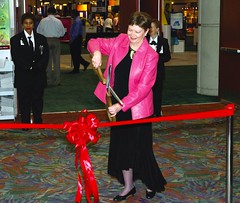
ASCD President Martha Bruckner gets a handle on a pair of scissors at the ribbon-cutting ceremony to open the Exhibit Hall Saturday morning at the ASCD Annual Conference and Exhibit Show. Also on hand at the ceremony was the Philharmonic String Quartet from Winter Park High School.


Eduardo Rivas, Miami-Dade County Public Schools, Miami, Fla.; Valerie Collins, VL Collins Consulting Professionals, Inc., Apopka, Fla.; Dennis Littky, The Big Picture Company, Providence, R.I.; Belinda Williams, Conshohocken, Pa.; and Tim Waters, McREL, Aurora, Colo., took part in the Improving Achievement for Students in Poverty forum Saturday afternoon at the ASCD Convention and Exhibit Show.
Read the full post . . .


ASCD Honors Nevada Principal as OYEA Winner

During the Opening General Session, ASCD honored Nevada Principal Pete Hall as the third recipient of the Association's Outstanding Young Educator Award (OYEA). Hall, principal of Anderson Elementary School in Reno, Nev., was selected for the inventive leadership he has displayed in transforming a low-performing elementary school into a high-achieving school.
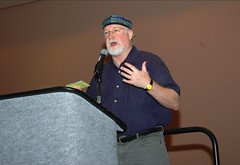
"Pete Hall is not a typical elementary school principal," said ASCD Executive Director Gene Carter, who presented the award to Hall. "Where others see overwhelming odds, he sees opportunity. Where others see a risk of failure, he sees his calling. For his determination in helping the students who need his help the most, ASCD is proud to name him the Outstanding Young Educator of the Year."

"He is a strong leader who encourages creative thought and innovative teaching among his staff," said Wayland Denny, dean of students at Anderson Elementary, who nominated Hall for the award.

Saying that the award is a celebration of the contributions of all educators, Hall called for educators to join him in what he respectfully called "the attack."

Hall was selected from four national finalists for the 2004 OYEA Award. The other finalists are
  • Jarrett Reid Whitaker, a science and lab teacher and instructional coordinator at Port Houston Elementary School in Houston, Tex.
  • La'Mont Geddis, a technology coordinator and teacher at Ernest E. Just Middle School in Mitchellville, Md.
  • Alesia Slocumb-Bradford, a math teacher at Jefferson Junior High School in Washington, D.C.
As the ASCD Outstanding Young Educator of the Year, Hall will be profiled in Educational Leadership and will receive a check for $10,000. He also earned an ASCD Institutional Membership for his school.
Nominations are currently being accepted for next year's award.


Read the full post . . .


Teach from the Heart to Develop Students

The key to Dennis Littky's talk on "Big Picture Education" Saturday was the snapshot view he gave into life at the Metropolitan Regional Career and Technical Center ("The Met") in Providence, R.I.

Littky is the former principal and current director of the school that creates a curriculum from a student's interests. He wants students to study what they are interested in and expects them to launch into research on that subject with a passion fueled by advisors and parental support.

It is the type of approach that put a microphone in the hands of 16-year-old student Josue Lopez, who gave a heart-provoking assessment of his life that includes an imprisoned father and the determination to avoid following in his father's footsteps. Lopez is one of about 700 students attending The Met. These students have taken on studies that range from designing fashion to putting an award-winning spin on hypertension among African Americans.

"Our mantra is 'one student at a time,'" Littky said. "We enroll families, not just kids."

Littky, known as Doc, admitted that sometimes such bold approaches are a leap of faith-for example, the student who wanted to study the rapper Tupac. From that spark came the student's evolving interest in people who make an impact on society. Before graduation, the same pupil was researching activist Nelson Mandela and orchestrating a peace forum.

Unconventional gambles like these have paid off in other ways for the poor and minority students who attend The Met. Littky said his students not only get into college, 75 percent graduate-a far cry from the typical 10 percent college graduation rate he described for most African Americans and Hispanics.

"I don't think we realize how tough it is for our kids to make it in college," Littky said.

Littky continued to remind his audience that students need to learn how to solve problems, not just learn from books. He challenged educators not only to think outside of the box, but also outside the classroom for tools and ways to give children new and useful experiences. He encouraged the group to roll up their sleeves, and he threw out a challenge: "What can you do on Monday to be a little bit different at your school?"

Read chapters from Littky's recent book The Big Picture: Education is Everyone's Business.
Read the full post . . .


Keynoter Satcher Raises Alarm Over Obesity

There's no question about it. Students are becoming increasingly overweight, and it has reached a point where obesity is as much an educational issue as it is a public health one. So noted former U.S. Surgeon General David Satcher during Saturday's Opening General Session when he addressed "The Obesity Epidemic: What It is Costing Schools."

"Since 1980, we have seen a doubling of overweight and obesity in children," said Satcher, director, National Center for Primary Care, Morehouse School of Medicine, Atlanta. "In every sense of the word, it is an epidemic if we have ever seen one."

Only two percent of children are eating the recommended servings of fruits and vegetables today, according to Satcher. More than 80 percent of children are eating too much fat, and only one in four American children is getting 30 minutes or more of recommended daily activity.

"The bottom line is that nine million school age children and adolescents are overweight- that's 16 percent of our children," Satcher said. "With obesity, we are facing one of the major threats to health and to learning. That threat to learning is very real."

For example, poorly nourished children score lower on standardized tests, Satcher noted. They are also more irritable, have trouble concentrating and are less able to resist infection.

The former Surgeon General said schools can unwittingly contribute to obesity in children through practices and policies that aggravate poor student health and interfere with their readiness to learn. Students pay the consequences through poorer health and lower academic achievement. School systems pay the consequences through lower state funding, because much of reimbursement is tied to student attendance.

That makes a difference of as much as $28 million a year in New York City schools and $9 million a year in Chicago schools. "Evidence suggests that addressing students' health can help schools meet student performance goals and alleviate financial constraints," Satcher said. "Schools play a critical role in helping students by addressing nutrition and physical activity."

In an effort to address the growing problem of obesity among children, Satcher recommended supporting the Action for Health Kids, which is a partnership of leaders in education, health, industry, parent organizations and government to promote physical activity and nutrition among the nation's children. It involves more than 4,000 volunteers, 51 state teams and 47 national partnership organizations. "You have to motivate students to eat well," Satcher said. "We have an opportunity in our schools and homes to create the kind of environment where children can easily access healthy foods. Action for Healthy Kids is working hard to improve children's eating habits, to increase children's physical activity and to educate administrators, educators, students and others about the importance of these things."

Find out more about ASCD's Health in Education program.
Read the full post . . .


Saturday, April 02, 2005

Sunday Schedule to Meet ASCD Authors

Come by the ASCD Center in booth 1451 in the Exhibit Hall, where you can meet your favorite ASCD authors, view videos, and find out more about the benefits of being an ASCD member at the membership desk.

Meet Your Favorite Authors
Come and introduce yourself to some of ASCD's most respected authors and have them sign a copy of a book. The authors who will be in the ASCD Center Sunday, April 3 are
Check out the whole Meet the Authors schedule.

View Videos, Explore Books
In the ASCD Center, you can also view ASCD videos and explore our latest resources for educators, including
Join Us
Find out about the benefits of joining ASCD at the membership desk in the ASCD Center. If you're already a member and want to renew or upgrade your membership or have a question about it, you can get your answers here.
Read the full post . . .


Stop by the Exhibit Hall at ASCD and Win

ASCD conference attendees who visit the ASCD Exhibit Show always come away with good contacts, new resources, and bright ideas. But, with a little luck, some may also leave with prizes such as
  • a laptop computer
  • gift certificates for spa services
  • an iPod
  • a camcorder
  • a DVD player

Attendees were provided prize tickets with their ASCD program books and conference materials. Participants can compete for the prizes by completing the tickets and visiting the Exhibit Hall daily to drop off each entry-one ticket per person.

Ticket collection baskets can be found in the Exhibit Hall:
  • across from booth 626
  • at the end of aisle 1200
  • in the middle of aisle 1800
All drawings will be held in the ASCD Center.

Saturday Prizes (Drawing to be held at 3:00 p.m. Prizes must be claimed by noon on Sunday.)
  • Emerson DVD/CD Player
  • Tungsten Palm PDA
  • Samsung Digital Camcorder
  • Audiovox Portable Handheld TV with A/C Adapter
  • Nintendo GameBoy Advance SP
  • HoMedics-Envirascape Relaxing Rains Sound Machine
  • One $75 Amazon.com Gift Certificate
  • One $100 Spa Finders Gift Certificate
  • Two Starbucks Gift Cards of $25 each

Sunday Prizes (Drawing to be held at 2:45 p.m. Prizes must be claimed noon on Monday.)
  • JVC Camcorder with Optical Zoom
  • Apple iPod Mini Blue
  • Canon PowerShot Digital Camera
  • One $75 Amazon.com Gift Certificate
  • One $100 Spa Finders Gift Certificate
  • Two Starbucks Gift Cards of $25 each
  • Plus any prizes not claimed from Saturday's drawing. Don't let your prize be left unclaimed. Check the Sunday newspaper for prize winners or visit the ASCD Center in the Exhibit Hall before noon.

Monday Prizes (Drawing to be held at 12:45 p.m. Prizes must be claimed by 3:00 p.m. on Monday.)
  • Dell Inspiron 1150 Notebook Computer with Pentium 4 Processor, Microsoft Windows XP, and Professional Shuttle Case
  • Polaroid 7" Widescreen Portable DVD/CD/MP3 Player
  • Nintendo GameBoy Advance SP
  • One $75 Amazon.com Gift Certificate
  • One $100 Spa Finders Gift Certificate
  • Two Starbucks Gift Cards of $25 each
  • Plus any prizes not claimed from Sunday's drawing. Don't let your prize be left unclaimed. Check the Monday newspaper for prize winners or visit the Information Kiosk or ASCD Center in the Exhibit Hall before noon.

All attendees are invited to complete their tickets and visit the Exhibit Hall to submit them. Winners have until noon the next day to claim their prizes (3:00 p.m., Monday, for prizes drawn Monday).
Read the full post . . .


Saturday Session Notes

David Satcher Calls on Educators to Aim High, OYEA Winner Inspires Audience

Former Surgeon General Encourages Attention to Student Health
In the opening general session, David Satcher talked about the importance of giving attention to students' mental health as well as encouraging physical activity, nutrition, avoiding toxins, and responsible sexual activity.

Encouraging educators to not only pursue health in education, but also pursue excellence, Satcher closed by quoting Benjamin Mays from his days at Morehouse College: The great failure in life is not in failing to reach your goals, but having no goals for which to reach. "Not failure, but low aim is a sin."

Satcher said, "I hope we will never be guilty of low aim when it comes to our children."

OYEA Winner Inspires Audience
Pete Hall, the ASCD Outstanding Young Educator Award (OYEA) winner, said the award is not about him but a celebration of the contributions of all educators and "the promise of a stronger future." He asked educators in attendance to join him in what he respectfully called "the attack."
  • Attack illiteracy. Dedicate your schools to the teaching and learning of literacy.
  • Attack the status quo. "I urge you to rock the boat," he said. "Change is always a prerequisite for improvement." He said his personal philosophy was "always strive to be a better you."
  • Attack apathy. "Light fires, care, get involved." Don't allow standards to be lowered to meet a progress goal.
Hall received a standing ovation for his message: "Every child has limitless potential. Draw it out of them and expect no less than excellence."

Read more about Hall.

  • Learn more about Pete Hall in this Educational Leadership article.
  • Hear more from Pete Hall in this Education World "Wire Side Chat."


Read the full post . . .


From the Pre-Conference Institutes

At Friday's "Leading by Design" session during the ASCD Pre-Conference Institutes, educational consultant and ASCD Faculty member Jay McTighe, coauthor of Understanding by Design (expanded 2nd edition), shares with school district and local school leaders practical, proven strategies and tools for improving student achievement.
Read the full post . . .


More Conference Sights and Sounds

This morning, Martha Bruckner welcomed the conference attendees gathered for the opening general session and read a poem someone from South Africa had sent her. She ended with "God bless the children of South Africa. God bless the children of Orange County, Florida. God bless the children of Millard Public Schools, Nebraska. God bless all our children. They’re the reason we’re here to learn more."

Orange County Schools Superintendent Ronald Blocker spoke next and thanked ASCD, Pearson, and NOVA for the contributions from the Books Bash for the district's Title I students. He noted the importance of literacy and noted that his district has 90-minute reading blocks in every school, with whole or small-group instruction. The district also is tackling high school reform with a program that focuses on rigor, reading, relevance, and relationships. The schools are beginning to offer Saturday and after-school programs, to keep their media centers open until 7 p.m., and get parents more involved in the schools.

Blocker noted though, that with all the emphasis on improving assessment results, he wants to be sure that the schools don’t increase test scores and turn students off to reading.

Photo: Mark Regan

Read the full post . . .


Mayor Declares "ASCD Day" in Orlando

To kick off the ASCD Conference and Exhibit Show, Orlando Mayor Ernest Page issued a proclamation declaring April 1, "ASCD Day." The mayor's representative, Marcia Hope Goodwin, Orlando's director of community affairs, presented a key to the city to ASCD Executive Director Gene Carter during the Books Bash on Friday evening.

Read more about the Books Bash
.
Read the full post . . .


Sights and Sounds on Saturday

Before the ribbon cutting to open the Exhibit Hall this morning, a string trio from Winter Park High School filled the hall with beautiful music to welcome conference goers. Michael Simpson directed the trio.

Then, before David Satcher's opening General Session presentation, the Bear Lake Sound, a student group from Bear Lake Elementary School, inspired the audience with their presentation using a variety of instruments and songs.

The students seamlessly tied in introductory remarks that reflected the conference theme, "Voices of Education: Unleashing the Power, Passion, and Promise," and ASCD President Martha Bruckner noted afterward how pleased she was that they included the "three P's" in their presentation.

As an introduction to the song "Possibilities," the elementary students took turns sharing their career goals by saying, "There's a great possibility that I will be ..."
  • a veterinarian
  • an elementary music teacher
  • the first female and Hispanic president
Their inspiring presentation brought tears to the eyes of some audience members. One South Carolina elementary music teacher in the audience noted that they sounded great and that such a wonderful program required funding for the variety of instruments.

The group of about 100 students from Seminole County Public Schools was well-coached by music director Artie Almeida and well-supported with parent volunteers who helped transport, set up, and break down the instruments and sound systems.

The students started off surrounding a section of the session participants and doing a rhythmic song with boomlackers that echoed a welcome throughout the hall. Wearing bright purple shirts with black shorts or skirts, the students played a variety of instruments including glockenspiels, metallophones, xylophones, steel drums, tubano drums, hand drums, maracas, and sporting blue, green, and red recorders around their necks.

Other songs included "Teach the Child, Touch the Future," which the students punctuated with hand gestures and well-rehearsed solos. The finale was a celebration of Florida wildlife using instruments such as duck sounds, wooden clackers, and bells, to tell a story about "Florida critters" including squirrels, alligators, ducks, flamingos, possums, and manatees.

At one point, audience members were bumping into each other trying to capture the performance on cameras. The presentation let audience members appreciate the inspiring demonstration of learning that can occur when schools give priority to their arts programs and help children develop their creativity.

Photo: Mark Regan

Read the full post . . .


Taking the Bull by the Horns at the Books Bash

Participants took the bull by the horns at ASCD's Books and Fun in the Sun Bash on Friday evening, April 1. The party with a purpose brought attendees together to donate books for Orange County Public Schools.

The highlight of the evening came when one teacher donated 15 boxes of books from her former classroom library. Reflecting ASCD's worldwide membership, attendees brought books from as far as Singapore and Halifax, Nova Scotia, to deliver at the Bash. Many of the donated books were from authors in attendees' local areas, such as those brought by Bash attendees from Wisconsin.

The event kicked off the conference with a carnival theme. Although the games were tough, everyone was a winner as conference attendees donated about 4,000 books to benefit Orange County Title I Public Schools. The event was hosted jointly by ASCD, Pearson Education and NOVA Southeastern University. In addition to cosponsoring the Bash, Pearson Education and NOVA Southeastern University provided additional books to educators who wished to purchase them on site for the children.

Where does the bull come in? Well, it was April Fool's Day, and the games that appeared teasingly easy were quite a challenge. The strength tester game required players to pull on a bull's horns until it groaned and wait with bated breath for the assessment-which could be anything from "eat more spinach" to "athlete" and more. ASCD conference goers are not quitters though, they tossed rings on swords suspended through a magic carpet, aimed softballs into milk cans, rolled bowling balls with finesse, and moved to the sounds of "The Macarena."

ASCD affiliates span the globe. Find an ASCD affiliate near you.
Join like-minded educators interested in literacy in our Language, Literacy, and Literature Network.


Read the full post . . .


Meet the ASCD Candidates

Conference attendees are invited to attend the first-ever ASCD Meet the President-Elect Candidates Forum on Sunday, April 3.

Immediate Past President Ray McNulty will facilitate this inaugural event. The President-Elect candidates (who will run for election in the fall of 2005) will share their visions for leadership of the Association.

The forum will be held on Sunday, April 3, 4:00-5:00 p.m. at the Orange County Convention Center, Room W307 C/D.
Read the full post . . .


Saturday Schedule to Meet ASCD Authors

Come by the ASCD Center in booth 1451 in the Exhibit Hall, where you can meet your favorite ASCD authors, view videos, and find out more about the benefits of being an ASCD member at the membership desk.

Meet Your Favorite Authors
Come and introduce yourself to some of ASCD's most respected authors and have them sign a copy of a book. The authors who will be in the ASCD Center today, Saturday, April 2 are
Check out the whole Meet the Authors schedule.

View Videos, Explore Books
In the ASCD Center, you can also view ASCD videos and explore our latest resources for educators, including
Join Us
Find out about the benefits of joining ASCD at the membership desk in the ASCD Center. If you're already a member and want to renew or upgrade your membership or have a question about it, you can get your answers here.
Read the full post . . .


Welcome to ASCD's 60th Annual Conference and Exhibit Show!

The ASCD Conference Planning Committee established an important theme for this meeting in Orlando: Voices of Education: Unleashing the Power, Passion, and Promise.

Educators have the opportunity, the responsibility, and the power to challenge on a daily basis. We know we need to challenge our students, but we must also challenge our leaders and ourselves to best serve the children we encounter. Likewise, our passion to lead should not be optional; it is part of the fabric of being an educator. Finally, we don't just hope that we will be successful. We promise to succeed-for the good of our students and our communities worldwide.

Thanks for taking time out of your busy lives to travel to this beautiful city and important conference. The information you gather and the relationships you nurture here will nourish you personally and professionally. I trust that the "souvenirs" you take home with you will impact the lives of children for a long time to come. Best wishes!

Martha Bruckner
Read the full post . . .


Friday, April 01, 2005

Get Ready for the Books Bash!

Judy Ochse, an ASCD associate editor, just reported in from the Rosen Centre Hotel Ballroom, where everyone is busy setting up for the Books and Fun in the Sun Bash. With people bustling about setting up carnival games, blowing up balloons, and making preparations for thousands of revelers, Judy says that, "the ballroom has become a city unto itself."

Kathleen Burke, annual conference director, and Jan McCool, annual conference manager, just came in from overseeing the set up of all the booths in the convention center. They told Judy how excited they are that, through the blog, everyone who can't make it to conference will still be able to keep up with the happenings in Orlando.

Then Kathleen and Jan were both off to continue helping set up for the Bash, as was Judy, who exclaimed, as she surveyed the festive attractions being assembled, "it's amazing how it all comes together. Everybody just pitches in and helps out. It really is a party with a purpose."

If you're not already on your way to the Bash, head out now. You won't want to miss it. Check back here tomorrow for a full report on the festivities.
Read the full post . . .


How do I . . .? What if . . .?

A reader posted a comment, asking, "If my ticketed session is canceled, can I get a ticket to another ticketed session?"

Yes, you can. Find out how in our reply to their comment.

How can you get answers to your conference questions?

While you are online
  • Check our conference FAQ (Frequently Asked Questions).
  • Post a comment on the blog, which sends us an e-mail notification, using the comment link at the bottom of each blog post.
  • Contact us.
When you are at conference, check in at the information kiosk or the ASCD Center, in booth 1451 in the Exhibit Hall, where you can
Read the full post . . .


Meet ASCD Authors, View Videos, Join Us at the ASCD Center

Come by the ASCD Center in booth 1451 in the Exhibit Hall, where you can meet your favorite ASCD authors, view videos, and find out more about the benefits of being an ASCD member at the membership desk.

Meet Your Favorite Authors
Come and introduce yourself to some of ASCD's most respected authors and have them sign a copy of a book. Authors who will be in the ASCD Center include
  • Arthur L. Costa
  • Charlotte Danielson
  • Robert Marzano
  • Jay McTighe
  • Dennis Littky
  • Carol Ann Tomlinson
  • Grant Wiggins
Check out the whole Meet the Authors schedule.

View Videos, Explore Books
You can also view ASCD videos and explore our latest resources for educators, including
Join Us
Find out about the benefits of joining ASCD at the membership desk in the ASCD Center. If you're already a member and want to renew or upgrade your membership or have a question about it, you can get your answers here.
Read the full post . . .


Thursday, March 31, 2005

Report from Orlando

Kathleen Burke, director of ASCD's Annual ConferenceKathleen Burke, director of ASCD's Annual Conference, reported from Orlando this morning that the 2,000 Pre-Conference Institute attendees are enjoying beautiful weather, with temperatures expected to reach 85 degrees today.

That's more than warm enough for those waiting to watch the ducks at the Peabody Hotel take their daily promenade from their room to the fountain, but more about the ducks later.

Kathleen also had
  • helpful tips for those staying at the Rosen Plaza Hotel
  • updates on conference preparations
  • information about where to get reports, updates, and news
  • more about those ducks

For Those Staying at the Rosen Plaza Hotel
Kathleen wants to make sure that those of you
staying at the Rosen Plaza Hotel, which is across the street from one end of the convention center, know that conference registration center is located at the opposite end of the convention center, across from the Rosen Centre Hotel.

Registration, Exhibits, Party with a Purpose
Kathleen reported that ASCD staff is busy setting up the registration center and information kiosks, in anticipation of your arrival at conference. At the same time, exhibitors are arriving and setting up today and tomorrow. Make sure that you use our enhanced online exhibitor guide to quickly find the exhibitors you are interested in. Preparations will also be underway soon for the ASCD service event that is a party with a purpose—the Books and Fun in the Sun Bash.

Stay Tuned
Kathleen wanted to remind everyone that during conference we will post notices and reports from ASCD staff about conference sessions, special events, and news on this blog. You can comment on any posting on this blog by using the comment link at the bottom of any post.

After conference we will continue to update the blog. Look for reports from sessions that you weren't able to attend, audio highlights from key sessions (similar to our Speaker Spotlight audio conference preview), and comments from fellow participants.

About Those Ducks
Kathleen reports that people stake out spots and settle into their folding chairs early in the morning to ensure a good view of the Peabody Hotel ducks. With over 600 conference sessions to choose from, you might not have the time to see the ducks promenade, but you can find out more about the ducks.
Read the full post . . .


Wednesday, March 30, 2005

Session Update-Letter from John Goodlad

One of education's most revered sages, John Goodlad, was to present one of the sessions in our Distinguished Lecturer series at conference. However, he is undergoing treatment for an ongoing illness, which will prevent him from joining us at conference.

Reflecting on his illness, and a conversation with his son, have led Goodlad to understand that his current personal experiences mirror his prescriptions for education. He explains that in this letter, addressed to all conference participants.

Please feel free to comment on the letter, respond to Goodlad, or send him a note using the comments link at the bottom of the post. We will pass all of your comments to him.


Illness as a Learning Experience

John I. Goodlad

For the past five months, regaining my health has dominated my daily life. The accompanying hours of contemplation have had a profound impact on my thinking. This has not changed my ecology of belief, but it has made elements of it much clearer: We will not have the nation of our rhetorical expectations—the American Dream—until equity and justice for all are at the heart of school mission, public policy, and our daily behavior. This is the argument of the book written with colleague Corinne Mantle-Bromley and son Stephen John Goodlad, published last year, Education for Everyone: Agenda for Education in a Democracy. My ill health seems to mirror that of the nation.

On our way to the clinic one day, I railed to Stephen about the dehumanization accompanying serious illness. He took exception, claiming quite the reverse—that I am going through a very humanizing journey of actually experiencing the downside of being human. I was sharply reminded of my own teaching: reading, thinking, and talking about the shortcomings of my social and political democracy fall far short of addressing them.

Reflecting on Stephen's remark brought me into the parallel between the inequities and injustices in our care of the disabled and the education of the young. Because of the education I was fortunate to get from my little-schooled parents and from our schools, I am now getting the best of health care. (See my Romances with Schools: A Life of Education, published in 2004). But millions of children are deprived of the education that provides a pathway into the resources they need to live productive, satisfying lives and to ensure such for their children.

Day after day during these five months, I have listened to the conversations of people young and old who not only suffer life-threatening illnesses but also contemplate years of accompanying indebtedness that will deprive them of what the more fortunate take for granted, I among them.

As we go about our work each day, how often do we ever think about the relationship between the education we seek to provide and the well-being of both our democracy and the diverse array of human beings in its care? Are those we elect to care for this democracy aware that those test scores they seek to raise correlate not at all with the dispositions of honesty, integrity, good judgment, dependability, compassion, good workmanship, and the like that we expect of our citizens and that we expect our schools to develop in the young?

We do not need more education summits and commissioned reports to tell us what is wrong and what to do. But we do need lay leaders who sit in the equivalent of those clinic waiting rooms, participating with the advantaged and disadvantaged in conversations of our cultural infrastructure. And we do need educators—positional leaders or not—who hurry home from conferences such as this to work with their colleagues, students, and parents in taking inventory of the inequities and injustices embedded in their schools and pursuing an agenda of renewal. Even with our disabilities, we are fortunate to be doing the work we do with the personal abilities our circumstances have enabled us to develop.

Stephen was right. Although my daily curriculum would not be of my choosing, it is enriching my readiness for work awaiting me. I look forward to having the time to use well what I am learning. I very much regret, however, that I will not be able to bring to what I do a couple of months from now what I would have learned from attending the 2005 ASCD Annual Conference.

John I. Goodlad is president of the Institute for Educational Inquiry and a founder of the Center for Educational Renewal at the University of Washington. He is the author of over thirty books on education, including the highly acclaimed A Place Called School (McGraw-Hill, 1984), Teachers for Our Nation's Schools (Jossey-Bass, 1990), and In Praise of Education (Teachers College Press, 1997).
Read the full post . . .


Who's Exhibiting in Orlando?

Maximize your free time in the conference exhibit hall. Decide which booths are first on your list after reviewing the 400+ companies ready to wow you at this year's Exhibit Show.

Be sure to check out our online tool that makes it easy to find where exhibitors will be in the exhibit hall, with an interactive map of the hall. First, check the complete list of exhibitors, and then head over to our enhanced online exhibitor listing.

If you are an exhibitor, you will find all the information you need on our exhibitors page.
Read the full post . . .


ASCD Networks Receive Awards

Are you interested in
  • . . . rural schools?
  • . . . mentoring?
  • . . . new teachers?
  • . . . character education?
If so, you might be interested in the three award-winning ASCD networks on these topics.

Award Winners

On Saturday, April 2, three ASCD networks will be recognized with a Network Publication Award at the annual Network Facilitators Meeting at our Annual Conference. The award-winning networks are the

What Are Networks?

ASCD networks are member-initiated groups designed to unite people around a common area of interest in the field of education. Network members can
  • exchange ideas
  • share information
  • identify and solve problems
  • grow professionally
  • establish collegial relationships
Because members can be widespread, communication via newsletters, journals, and other publications is the most important link for many network members. As the networks program has grown, network publications have developed into important vehicles for sharing, learning, and growing.

Outstanding Achievement

The Network Publication Award recognizes outstanding achievement in editorial and graphic content. Editorial content is evaluated on the basis of
  • relevance of topic to the intended audience
  • reflection of constituent needs, problems, solutions
  • innovation of approach or interpretation of topic
  • appropriateness of style, length, etc. for topic
  • excellence in quality of writing
  • availability of space for member’s articles
Graphic content is considered as one element in the evaluation of each entry on the basis of
  • appropriate use
  • enhancement of editorial content
  • creativity
  • extent to which design and layout convey network image
Read the full post . . .


Tuesday, March 29, 2005

What Do You Think of This Blog?

This blog is the result of feedback from our members and Education Update readers, who told us that they found our Annual Conference coverage useful, but wished that it was more timely.

We strive to make make our Web pages informative, interesting, and user friendly, and we want to hear from you if we are succeeding.

You can provide feedback on our blog by using the comment link at the bottom of any post.

Questions or Concerns?

If you have a question or concern about Annual Conference, you may find the answer to your question in our frequently asked questions. If you don't find the answer to your question there, please contact our exhibits manager or director of annual conference.

Exhibits Questions

Teola Jones
Exhibits Manager
tjones@ascd.org

Conference Program Questions

Kathleen Burke
Director of Annual Conference
kburke@ascd.org

Conference Registration Questions

ASCD Service Center
1-800-933-2723, then press 2
member@ascd.org

Read the full post . . .


Tuesday, March 22, 2005

Mihaly Csikszentmihalyi, psychologist, interviewed

Mihaly Csikszentmihalyi, our closing general session speaker, is one of the world's leading authorities on the psychology of creativity. He will explain his work on "flow," a state of consciousness that entails a passionate involvement with life, and propose a model of how flow can be used to bring about more positive experiences in classrooms.

Listen to the interview.

Starting January 18, and continuing each week until the Annual Conference begins, Kathleen Burke, director of ASCD Annual Conference, will conduct a series of interviews with key conference presenters, highlighting issues and themes that attendees will discuss in Orlando. Visit Speaker Spotlight to listen to each interview in streaming audio or read a transcript.
Read the full post . . .


Tuesday, March 15, 2005

Yvette Jackson, executive director of the National Urban Alliance, interviewed

Successful strategies for reversing the underachievement in urban students will be the focus of Yvette Jackson's presentation at this year's ASCD Annual Conference. Jackson, executive director of the National Urban Alliance, speaks about the ideas she plans to share with her session attendees.

Listen to the interview.

Starting January 18, and continuing each week until the Annual Conference begins, Kathleen Burke, director of ASCD Annual Conference, will conduct a series of interviews with key conference presenters, highlighting issues and themes that attendees will discuss in Orlando. Visit Speaker Spotlight to listen to each interview in streaming audio or read a transcript.
Read the full post . . .


Tuesday, March 08, 2005

Tom Houlihan, executive director of CCSSO, interviewed

Tom Houlihan, executive director of the Council of Chief State School Officers (CCSSO), talks about what attendees will learn in his session, entitled "NCLB: Current Strengths, Challenges, and Future Direction."

Listen to the interview.

Starting January 18, and continuing each week until the Annual Conference begins, Kathleen Burke, director of ASCD Annual Conference, will conduct a series of interviews with key conference presenters, highlighting issues and themes that attendees will discuss in Orlando. Visit Speaker Spotlight to listen to each interview in streaming audio or read a transcript.
Read the full post . . .


Tuesday, March 01, 2005

Valerie Collins, ASCD author, interviewed

Valerie Collins, coauthor of the ASCD book Literacy Leadership for Grades 5–12 and president of VL Collins Consulting Professionals, previews her interactive forum on Improving Achievement for Students in Poverty.

Listen to the interview.

Starting January 18, and continuing each week until the Annual Conference begins, Kathleen Burke, director of ASCD Annual Conference, will conduct a series of interviews with key conference presenters, highlighting issues and themes that attendees will discuss in Orlando. Visit Speaker Spotlight to listen to each interview in streaming audio or read a transcript.
Read the full post . . .


Tuesday, February 22, 2005

Catherine Snow, Harvard Graduate School of Education professor, interviewed

"English Language Learners: What Do Teachers Need to Know?" is the topic of Catherine Snow's conference presentation. Snow, professor at the Harvard Graduate School of Education, talks about what attendees will learn at her session.

Listen to the interview.

Starting January 18, and continuing each week until the Annual Conference begins, Kathleen Burke, director of ASCD Annual Conference, will conduct a series of interviews with key conference presenters, highlighting issues and themes that attendees will discuss in Orlando. Visit Speaker Spotlight to listen to each interview in streaming audio or read a transcript.
Read the full post . . .


Tuesday, February 15, 2005

Ted Hershberg, professor of Public Policy and History, interviewed

Ted Hershberg, professor of Public Policy and History at the University of Pennsylvania, discusses what he plans to share with conference participants during his session, "Assessment and Accountability Systems to Transform America's Schools."

Listen to the interview.

Starting January 18, and continuing each week until the Annual Conference begins, Kathleen Burke, director of ASCD Annual Conference, will conduct a series of interviews with key conference presenters, highlighting issues and themes that attendees will discuss in Orlando. Visit Speaker Spotlight to listen to each interview in streaming audio or read a transcript.
Read the full post . . .